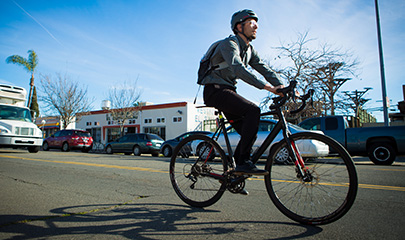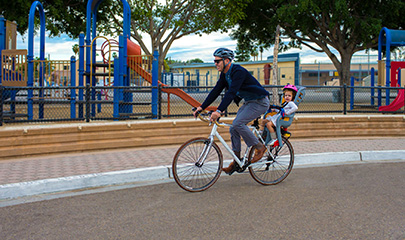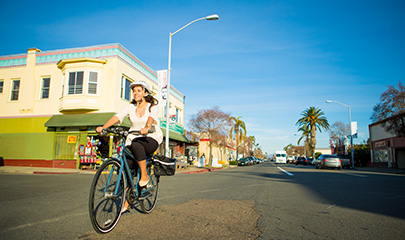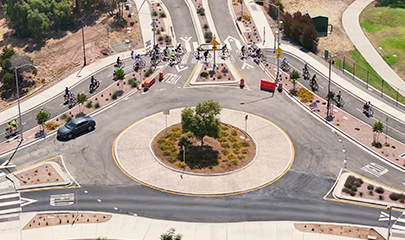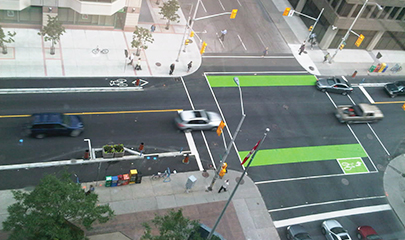




Complete Streets is a transportation planning and design approach that makes roads safer for all users, regardless of age, ability, or mode of transportation.
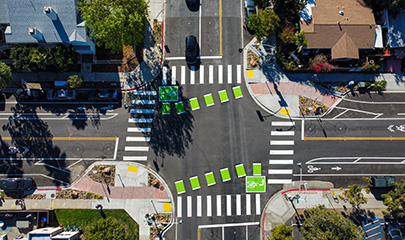
Key features of complete streets include wide sidewalks, safe crosswalks, medians, and dedicated bike lanes or shared-use paths separated from car traffic. These projects also often include upgrades to roadways and utilities. Complete Streets are safer for everyone and encourage environmentally friendly and healthy transportation options.
Understanding the Terminology
- Bike lane: A roadway lane defined by pavement markings that provide a restricted right-of-way for bicycle travel.
- Buffered bike lanes: Conventional bike lanes combined with painted areas that increase the distance between people on bikes and the adjacent motor vehicle travel lane and/or parking lane.
- Separated bikeways: A bikeway for the exclusive use of bicycles that requires a vertical separation between the bikeway and vehicle lanes.
- Two-way separated bike lane: allows people riding bikes to travel in two directions on a street which may be one-way for all other vehicles.
- Bike route: A route located on a shared roadway that accommodates vehicles and bicycles in the same travel lane.
- Bike Boulevard: A local road or residential street that has been enhanced with traffic calming and other treatments to facilitate safe and convenient bicycle travel.
- Traffic calming measures: High-visibility crosswalks, curb extensions, rapid flashing beacons, mid-block crossings, traffic circles, and traffic signal enhancements.